
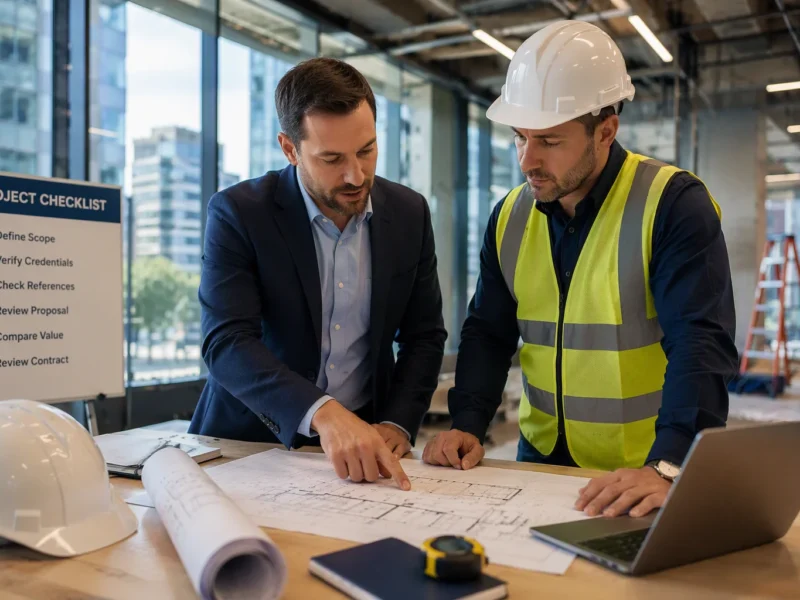
Whether you’re managing an office building, retail property, healthcare facility, multifamily high-rise, or industrial site, choosing the right contractor can make the difference between a successful project and a costly headache.
From HVAC replacements and plumbing upgrades to fire safety improvements and tenant buildouts, commercial projects require experienced professionals who can deliver quality work on time and within budget.
In this guide, we’ll cover the key factors every property manager, facility manager, and building owner should consider when searching for the best contractor for their next project.
Start With a Clear Project Scope
Before reaching out to contractors, define exactly what you need.
A detailed scope helps contractors provide accurate proposals and ensures you’re comparing similar bids.
Consider including:
- Project objectives
- Timeline requirements
- Budget expectations
- Building type and size
- Access restrictions
- Specific performance requirements
The more information you provide upfront, the more qualified and relevant the responses will be.
Verify Licensing and Insurance
Never assume a contractor has the proper credentials.
Before moving forward, request proof of:
- Business licenses
- Trade-specific licenses
- General liability insurance
- Workers’ compensation coverage
- Additional insured endorsements if required
For commercial properties, adequate insurance protection is critical for reducing risk and meeting property management requirements.
Look for Relevant Experience
A contractor who excels in residential projects may not be the best fit for complex commercial environments.
Ask questions such as:
- Have they worked on similar commercial buildings?
- Do they have experience with occupied properties?
- Have they completed projects of similar size and scope?
- Can they provide examples of recent work?
The best contractor is often the one with the most relevant experience—not necessarily the lowest price.
Review References and Past Projects
One of the best ways to evaluate a contractor is by speaking with previous clients.
Ask references about:
- Quality of workmanship
- Communication
- Project management
- Adherence to schedules
- Responsiveness to issues
- Overall satisfaction
Reliable contractors should be able to provide several references from recent commercial projects.
Evaluate Communication and Professionalism
Strong communication is often the difference between a smooth project and a frustrating experience.
Pay attention to:
- Response times
- Professionalism
- Attention to detail
- Clarity of proposals
- Willingness to answer questions
If communication is poor during the bidding process, it is unlikely to improve after the project begins.
Understand Safety Practices
Safety should be a top priority on every commercial project.
Ask contractors about:
- Safety training programs
- OSHA compliance
- Jobsite procedures
- Incident history
- Required certifications
A strong safety culture protects your building, tenants, staff, and visitors.
Compare Value, Not Just Price
The lowest bid is not always the best choice.
When reviewing proposals, consider:
- Experience
- Reputation
- Scope completeness
- Timeline
- Materials and equipment
- Warranty coverage
- Long-term reliability
An experienced contractor who completes the project correctly the first time often provides greater value than a cheaper alternative that results in delays or rework.
Review the Contract Carefully
Before signing any agreement, verify:
- Scope of work
- Payment schedule
- Milestones
- Change order procedures
- Warranty terms
- Project timeline
- Insurance requirements
A well-written contract protects both parties and helps avoid misunderstandings throughout the project.
Consider Long-Term Partnerships
The best contractors don’t just complete one project—they become trusted partners.
Property managers and facility professionals often work with the same vendors for years because they consistently deliver quality service and understand the property’s unique needs.
Building strong contractor relationships can simplify future maintenance, repairs, and capital improvement projects.
Final Thoughts
Finding the right contractor requires more than collecting a few bids. By carefully evaluating experience, credentials, communication, safety practices, and overall value, property professionals can make informed decisions that lead to better project outcomes.
Taking the time to vet contractors properly today can save significant time, money, and frustration tomorrow.
When the right contractor and the right project come together, everyone benefits—from property managers and facility teams to owners, tenants, and vendors alike.