Commercial buildings are complex assets that depend on dozens of interconnected systems operating efficiently every day. From HVAC equipment and electrical panels to plumbing systems and fire safety devices, proactive maintenance is essential for minimizing downtime, reducing repair costs, and extending the lifespan of building assets.
But one question property managers and facility professionals frequently ask is:
How often should commercial buildings perform preventive maintenance?
The short answer is that maintenance schedules vary by system, manufacturer recommendations, building age, occupancy levels, and regulatory requirements. However, every commercial property should have a structured preventive maintenance program in place to ensure critical building components are inspected, serviced, and tested regularly.
What Is Preventive Maintenance?
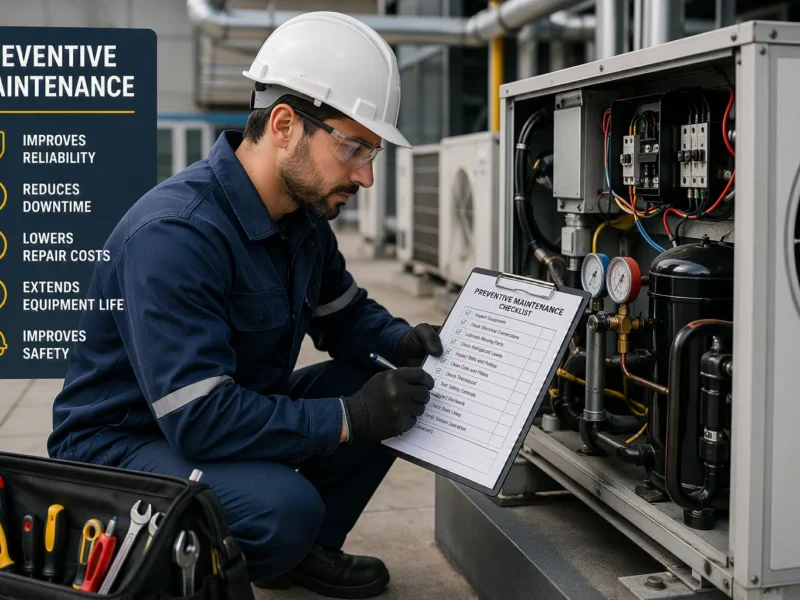
Preventive maintenance is the practice of performing scheduled inspections, testing, cleaning, adjustments, and repairs before equipment fails.
Unlike reactive maintenance, which addresses problems after they occur, preventive maintenance focuses on identifying potential issues early and keeping building systems operating at peak efficiency.
Benefits of preventive maintenance include:
- Reduced equipment failures
- Lower repair costs
- Improved energy efficiency
- Increased equipment lifespan
- Better tenant satisfaction
- Enhanced safety and compliance
- Fewer emergency service calls
For commercial properties, preventive maintenance is one of the most effective ways to protect long-term asset value.
Monthly Preventive Maintenance Tasks
Many critical building systems should receive monthly attention.
HVAC Systems
- Replace or inspect air filters
- Check thermostat settings
- Inspect belts and motors
- Verify proper airflow
Plumbing Systems
- Inspect for visible leaks
- Check water pressure
- Monitor pump performance
Building Maintenance
- Inspect common areas
- Check lighting fixtures
- Review work order trends
Safety Equipment
- Inspect emergency lighting
- Test exit signs
- Verify accessibility of fire extinguishers
Monthly inspections help identify small issues before they develop into major system failures.
Quarterly Preventive Maintenance Tasks
Many mechanical and operational systems benefit from quarterly servicing.
HVAC Equipment
- Inspect coils
- Check refrigerant levels
- Lubricate moving components
- Evaluate system performance
Electrical Systems
- Inspect electrical connections
- Test backup power systems
- Examine panels for signs of wear
Plumbing Systems
- Inspect pumps and valves
- Test backflow prevention devices as required
Quarterly reviews help maintain system efficiency throughout changing seasonal conditions.
Semi-Annual Preventive Maintenance Tasks
Twice-yearly maintenance is often recommended for equipment subject to seasonal demands.
Heating Systems
Before winter:
- Inspect boilers
- Test heating controls
- Verify burner operation
Cooling Systems
Before summer:
- Inspect chillers
- Clean condenser coils
- Verify cooling tower performance
Preparing equipment for seasonal loads helps reduce the risk of unexpected breakdowns during peak occupancy periods.
Annual Preventive Maintenance Tasks
Every commercial building should conduct a comprehensive annual review of major systems.
Annual Facility Maintenance Checklist
HVAC
- Full system inspection
- Air balancing review
- Equipment performance analysis
Electrical
- Infrared scanning
- Equipment testing
- Load evaluations
Plumbing
- Comprehensive pipe inspection
- Water heater servicing
- Drain system evaluations
Fire Safety Systems
- Fire alarm testing
- Sprinkler system inspections
- Emergency system verification
Building Exterior
- Roof inspections
- Facade assessments
- Sealant and waterproofing reviews
Annual inspections are critical for maintaining building reliability and supporting long-term capital planning.
Why Maintenance Frequency Varies
Not every building requires the same maintenance schedule.
Factors that influence frequency include:
Building Age
Older buildings often require more frequent inspections and servicing.
Occupancy Levels
Higher occupancy typically places greater demands on building systems.
Equipment Type
Critical HVAC, electrical, and life safety equipment may require more frequent attention than other systems.
Environmental Conditions
Buildings in extreme climates or high-traffic areas often experience accelerated wear and tear.
Manufacturer Recommendations
Always follow equipment-specific maintenance requirements provided by manufacturers.
A customized maintenance strategy is often more effective than a one-size-fits-all schedule.
Building a Preventive Maintenance Program
Successful facility maintenance programs typically include:
Asset Inventory
Document all major building systems and equipment.
Maintenance Scheduling
Create monthly, quarterly, semi-annual, and annual maintenance plans.
Work Order Tracking
Track completed work and identify recurring issues.
Vendor Management
Partner with qualified contractors for specialized systems and inspections.
Record Keeping
Maintain detailed maintenance records to support compliance, budgeting, and asset management decisions.
A structured program promotes consistency and accountability throughout building operations.
The Cost of Delaying Maintenance
Deferred maintenance often appears to save money in the short term, but it frequently leads to higher long-term costs.
Consequences may include:
- Unexpected equipment failures
- Emergency repair expenses
- Increased energy consumption
- Tenant complaints
- Reduced equipment lifespan
- Safety concerns
- Compliance violations
Preventive maintenance is typically far less expensive than emergency repairs and major equipment replacements.
Final Thoughts
Preventive maintenance should be an ongoing priority for every commercial property. While individual systems have different service requirements, most facilities benefit from a combination of monthly, quarterly, semi-annual, and annual maintenance activities.
A well-planned facility maintenance program helps property managers reduce risk, improve operational efficiency, control costs, and extend the life of critical building assets.
By following a comprehensive building maintenance checklist and partnering with qualified service providers, commercial buildings can operate more reliably while providing a safer and more comfortable experience for occupants.